How AI Agents are Revolutionizing Multi-Channel Marketing

How AI Agents are Revolutionizing Multi-Channel Marketing

Maximizing Engagement: The AI-Driven Approach to Multi-Channel Marketing

What if you could automate the complexity of reaching customers across multiple channels while also improving engagement?

According to HubSpot, companies with robust omnichannel customer engagement strategies retain, on average, 89% of their customers, compared to 33% for companies with weak omnichannel strategies.

Imagine reaching every customer on their preferred platform with a message that resonates perfectly. AI agents are making this a reality by transforming how businesses approach multi-channel marketing, making it more efficient and personalized than ever before. Learn how to implement AI agents in your business

However, managing multiple channels can be challenging, especially when trying to connect with customers who aren’t responding to traditional methods like email. This is where AI agents are making a significant impact. An automated agent can revolutionize your multi-channel marketing approach. They can automate the process of reaching out to customers across various channels, ensuring that no potential lead is missed. This transformation in the way businesses approach their marketing strategies is a testament to the practical benefits of AI in multi-channel marketing, saving you valuable time and resources.

Understanding Multi-Channel Marketing

Multi-channel marketing involves using various channels to reach and interact with customers. These channels may include email, text messages, phone calls, direct mail, social media, live chat, and more traditional channels like TV, radio, and billboards. The goal is to provide a seamless experience across all touchpoints, but this can only be easy to achieve with the right tools and strategies.

Enter AI Agents: The Game-Changers in Marketing

AI agents, like Alfred from Automation Agency, are revolutionizing the marketing landscape. Agency automation is transforming how businesses approach marketing. These automated agents use advanced algorithms and machine learning to interact with customers across multiple channels, providing personalized experiences at scale. This personal touch can make your customers feel valued and understood. Discover how to create your own AI agent like Alfred.

How an Automated Agent can Transform Multi-Channel Marketing

Each automated agent works tirelessly to improve customer engagement.

Enhanced Cross-Channel Communication: AI agents excel at marketing cross-channel, ensuring consistent messaging and experiences across all platforms.

Improved Customer Engagement: By analyzing data from various channels, AI agents can identify the best times and methods to contact customers, significantly improving engagement rates.

Personalization at Scale: AI marketing tools can tailor messages and offers based on individual customer preferences and behaviors, making each customer feel uniquely valued and understood.

Efficient Lead Management: Automated agents can qualify leads, schedule appointments, and nurture prospects without human intervention.

24/7 Availability: Unlike human agents, AI can operate round the clock, ensuring no opportunity is missed. This constant availability can provide you with the peace of mind that your marketing efforts are always active, even when you’re not.

Ready to transform your marketing with AI? Explore our AI agent solutions.

Case Study: Alfred in Action – Success with AI Marketing Tools

Automation Agency’s Automated Agent, Alfred, demonstrates the power of these tools in real-world scenarios. On its first day, Alfred was able to identify and engage with potential leads, resulting in over $17,500 in sales within his first few calls. This showcases the potential of AI in marketing automation, where a single AI agent can handle tasks that would have required a large team of human agents, and deliver significant results in a short period of time.

See how you can achieve similar results with your own AI agent.

How to Improve Email Engagement in Multi-Channel Marketing

One of the most significant advantages of AI agents is their ability to reach customers who aren’t engaging with emails. By leveraging data from multiple channels, these agents can identify alternative ways to connect with these customers, whether through social media, phone calls, or other preferred channels.

Discover how AI can revolutionize your email marketing.

Leveraging AI for Enhanced Email Performance

  1. Analyzing user behavior: AI agents can track and analyze customer interactions across multiple platforms, identifying patterns and preferences to optimize email timing and content for maximum engagement.
  2. Personalizing content: By utilizing data from various touchpoints, AI can tailor email content to individual recipients, increasing relevance and the likelihood of engagement.
  3. Segmenting audiences: AI-powered tools can create more accurate and nuanced audience segments based on cross-channel behavior, enabling highly targeted email campaigns.
  4. Implementing dynamic content: AI can automatically insert personalized elements into emails based on individual user data, making each message more appealing and relevant to the recipient.
  5. Optimizing send times: By analyzing engagement patterns across channels, AI can determine the best times to send emails to each individual, improving open and click-through rates.
  6. Creating targeted re-engagement campaigns: For unresponsive email subscribers, AI can craft personalized re-engagement strategies using insights from other channels where the customer is active.
  7. Integrating social media insights: AI agents can incorporate data from social media interactions to inform email content and offers, creating a more cohesive cross-channel experience.
  8. Automating follow-ups: Based on email engagement (or lack thereof), AI can trigger automated follow-up sequences across various channels, ensuring continued communication with the customer.

By implementing these AI-driven strategies, businesses can significantly improve their email engagement rates while ensuring they’re reaching customers through their preferred channels, creating a more effective and adaptive multi-channel marketing approach.

How AI Agents Enhance Inbound and Outbound Marketing

AI agents excel in both inbound and outbound marketing scenarios, offering a wide range of applications across various verticals:

Inbound Marketing Use Cases

Intelligent Chatbots for Customer Service: AI-powered chatbots revolutionize customer service across multiple industries. In retail, they handle product inquiries, process returns, and provide shipping updates. For banking, these chatbots assist with account inquiries and transaction history and offer essential financial advice. In healthcare, they schedule appointments, answer general health questions, and provide medication reminders, enhancing patient care and reducing administrative workload.

Automated Appointment Scheduling: AI agents streamline appointment scheduling across various sectors. In real estate, they book property viewings and follow up with potential buyers. For professional services, these agents schedule consultations for lawyers, accountants, or financial advisors, optimizing their time management. In the automotive industry, AI facilitates arranging test drives and service appointments, improving customer convenience and dealership efficiency.

Personalized Content Recommendations: AI excels at delivering tailored content to users. In e-commerce, it suggests products based on browsing history and previous purchases, enhancing the shopping experience. For media and entertainment, AI recommends articles, videos, or music based on user preferences, increasing engagement. In education, it offers personalized learning resources and course recommendations, adapting to individual learning styles and needs.

Lead Qualification and Nurturing: AI agents transform lead management across industries. In B2B software, they qualify leads based on company size, industry, and specific needs. For recruitment, AI screens job applicants and schedules interviews with qualified candidates, streamlining the hiring process. In insurance, these agents assess potential clients’ needs and guide them to appropriate policies, ensuring better matches between customers and services.

Outbound Marketing Use Cases:

Intelligent Cold Calling and Lead Generation: AI revolutionizes outbound marketing strategies. In technology, it identifies potential clients for new software solutions. For manufacturing, AI reaches out to businesses that might benefit from new equipment or supplies. In hospitality, these agents contact event planners for potential bookings, expanding business opportunities efficiently.

Automated Follow-up Communications: AI ensures consistent and timely follow-ups. In e-commerce, it sends personalized cart abandonment reminders, recovering potential lost sales. For non-profits, AI follows up with donors for recurring contributions, maintaining engagement. In the fitness industry, these agents check in with members who have yet to visit, encouraging regular attendance and member retention.

Targeted Promotional Campaigns: AI personalizes promotional efforts across sectors. In retail, it sends tailored offers based on past purchases and browsing history. For travel and tourism, AI promotes seasonal packages to customers based on their travel preferences. In financial services, these agents offer credit card upgrades or new investment opportunities to qualified customers, enhancing cross-selling and upselling efforts.

Market Research and Surveys: AI streamlines data collection and analysis. For consumer goods, it conducts product satisfaction surveys and gathers feedback, informing product development. In healthcare, AI collects patient feedback on their care experience, improving service quality. For hospitality, these agents gather guest reviews and preferences for future stays, enabling hotels to enhance their offerings and customer experience.

Cross-Channel Integration

What sets AI agents apart is their ability to integrate these inbound and outbound strategies across multiple channels seamlessly. Agency automation enables seamless integration across channels. For instance, an AI agent might:

Initiate contact via email, then follow up with a phone call if the email isn’t opened.

Use data from chatbot interactions to inform personalized email campaigns.

Combine insights from social media engagement with phone call scripts for more effective conversations.

This cross-channel approach ensures that businesses can reach and engage their audience through their preferred communication methods, significantly improving the effectiveness of their marketing efforts.

Implementing Automated Agents in Your Multi-Channel Marketing Strategy

Choosing the right automated agent is crucial for your marketing success. Here are the steps to harness the power of AI in your multi-channel marketing efforts:

  • Assess your current marketing challenges
  • Identify areas where AI can make the most impact
  • Choose the right AI marketing tools for your needs
  • Integrate the AI agent with your existing systems (CRM, email platforms, etc.)
  • Monitor performance and continuously optimize

Get started with implementing AI in your marketing strategy with Automation Agency today.

The Future of AI in Multi-Channel Marketing

As AI technology continues to evolve, we can expect even more sophisticated marketing automation solutions. These advancements will likely lead to even more personalized and effective cross-channel marketing strategies, further blurring the lines between inbound and outbound marketing.

AI agents are transforming multi-channel marketing, offering businesses a powerful way to engage customers across all touchpoints. By leveraging these automated agents, companies can improve efficiency, enhance customer experiences, and drive better results from their marketing efforts across various verticals.

Conclusion: The Impact of AI on Multi-Channel Marketing

If you’re looking to revolutionize your multi-channel marketing strategy, consider implementing an AI agent like Alfred from Automation Agency. With its ability to seamlessly integrate across channels and engage even the most elusive customers, an AI agent could be the key to unlocking your marketing potential in today’s competitive business landscape. Take the first step towards AI-driven marketing success.

Ready to take your sales to the next level with integrated marketing and CRM automation? Contact a Keap Marketing Automation Expert today. Call or text 602.900.9345 or visit https://automation.agency/ to learn how we can help drive your business growth.

Hiring A Sales Development Representative vs Deploying An AI Agent

Hiring A Sales Development Representative vs Deploying An AI Agent

The Evolving Landscape of Sales Development: Traditional SDRs vs AI Agents

In today’s rapidly evolving business landscape, the world of sales automation and marketing automation is undergoing a revolutionary transformation. As companies strive to stay competitive, the traditional roles of Sales Development Representatives (SDRs) and Business Development Representatives (BDRs) are being challenged by an innovative force: AI agents.

For years, businesses have relied on human sales dev representatives to drive their sales processes, nurture leads, and book appointments. These SDRs and BDRs have been the frontline warriors in the battle for market share and revenue growth. However, the emergence of sophisticated AI technology is reshaping this paradigm, offering a more efficient, cost-effective, and scalable solution.

Enter the world of AI agents – a game-changing development in sales automation that’s taking the industry by storm. These intelligent virtual assistants are not just tools; they’re revolutionizing how businesses approach sales development and customer engagement.

The Challenges of Traditional SDR Hiring

Before we delve into the AI revolution, it’s crucial to understand the hurdles businesses face with traditional SDR and BDR hiring:

  1. Time-consuming recruitment process
  2. Extensive training and onboarding periods
  3. High turnover rates and inconsistent performance
  4. Costs associated with salaries, benefits, and overhead

Introducing AI Agents: The Future of Sales Development

AI agents are revolutionizing sales and marketing automation. These sophisticated software programs, powered by advanced artificial intelligence and machine learning, offer capabilities that surpass traditional methods.Key advantages include:

  1. Automated calls and appointment booking: Independently conduct calls, qualify leads, and schedule appointments.
  2. 24/7 customer service: Answer queries and provide product information around the clock.
  3. Human-like interactions: Understand and respond to nuanced communication, adapting to each prospect.
  4. Rapid learning: Quickly assimilate vast amounts of information about products and services.

This paradigm shift is redefining lead generation, qualification, and conversion for businesses of all sizes.

Case Study: The Success of an AI Agent in Sales

To illustrate the potential of AI agents in sales, let’s examine a real-world example of an AI agent’s performance:

On its very first day of deployment, this AI agent generated over $17,500 in sales, far exceeding the expectations set for human SDRs and BDRs. What’s even more remarkable is the speed at which this AI agent became proficient:

  1. Rapid onboarding: Unlike human sales dev representatives who might require weeks or months of training, this AI agent was ready to perform after just two phone calls.
  2. Comprehensive knowledge acquisition: The AI agent quickly assimilated detailed information about the company’s products, services, and business automation solutions, demonstrating a depth of understanding that would take a human SDR or BDR significantly longer to achieve.
  3. Consistent performance: The AI agent maintained its high level of performance without the need for breaks, sick days, or vacation time, ensuring continuous engagement with potential clients.
  4. Cost-effective solution: This impressive sales figure was achieved without the associated costs of hiring, recruiting, or training that come with human sales development representatives.

This case study underscores the potential of AI agents to revolutionize the sales development process, offering a glimpse into a future where businesses can scale their sales efforts more efficiently and effectively than ever before.

Skyrocket your sales by implementing sales automation with our Generative AI Agent, Alfred. Click here to learn more.

The Rise of AI in Sales: A Paradigm Shift

In recent years, the sales landscape has witnessed a seismic shift. Artificial Intelligence, once a concept confined to science fiction, has emerged as a powerful force in the business world. This technological revolution is reshaping how companies approach sales development, offering solutions that address many of the pain points associated with traditional SDR roles.

Defining AI Agents in Sales

AI agents in sales are sophisticated software programs designed to simulate human-like interactions with potential customers. These digital entities leverage advanced algorithms, natural language processing, and machine learning to engage in meaningful conversations, qualify leads, and even close deals.

Key Capabilities of AI Sales Agents

  • Automated Engagement: From initial contact to follow-ups, AI agents can manage entire conversation flows.
  • 24/7 Availability: Unlike human SDRs, AI never sleeps, ensuring round-the-clock lead engagement.
  • Scalability: AI agents can handle multiple interactions simultaneously, dramatically increasing outreach capacity.
  • Data-Driven Insights: Every interaction is an opportunity for the AI to learn and improve its performance.

Explore more capabilities of an AI sales Agent by clicking here.

AI in Action: A Real-World Success Story

While the potential of AI in sales is exciting, real-world results speak louder than theoretical possibilities. Let’s examine a case that illustrates the transformative power of AI in sales development:

Imagine a company that decided to take a leap of faith and deploy an AI sales agent. On its inaugural day, this digital SDR achieved something remarkable – it generated over $17,500 in sales. This figure wasn’t just impressive; it was a revelation.

What made this success even more striking was the minimal setup time required. Unlike traditional SDRs who might need weeks or months of training, this AI agent was operational after just two phone calls. It rapidly assimilated vast amounts of information about the company’s offerings, demonstrating a depth of knowledge that would take a human counterpart significantly longer to acquire.

The implications of this case study are profound:

  1. Rapid Deployment: AI agents can be up and running in a fraction of the time it takes to recruit and train human SDRs.
  2. Consistent Performance: The AI maintained its high level of performance without fatigue or fluctuations in motivation.
  3. Cost-Effectiveness: This impressive sales figure was achieved without the overheads associated with human employees.
  4. Scalability: The success of one AI agent suggests the potential for exponential growth when deployed at scale.

Learn how a fully automated generative AI Agent can Create More Growth, Profits & Freedom.

Seeing is Believing: AI Agent in Action

Before we delve deeper into the comparison between AI agents and traditional SDRs, let’s take a moment to witness the capabilities of an AI agent firsthand. The following video demonstrates a real conversation between a business owner and an AI agent, showcasing its human-like interaction abilities:
This video provides a tangible example of how AI agents can engage in natural, productive conversations with potential clients. As you’ve seen, the AI agent’s ability to understand context, respond appropriately, and guide the conversation towards business objectives is remarkable. Click here to see the demo of how effective an AI Agent can be.

AI Agents vs. Traditional SDRs: A Comprehensive Comparison

Now that we’ve introduced both traditional SDRs and AI agents, let’s compare these two approaches across several key factors:
Traditional SDRs AI Agents
1. Cost-Effectiveness
Require salaries, benefits, and ongoing training Involve a one-time setup cost and ongoing maintenance
Involve recruitment and turnover costs No salaries, benefits, or physical space required
Need physical workspace and equipment Can scale without proportional cost increases
2. Efficiency and Productivity
Limited to working hours and breaks Available 24/7 without breaks
Can handle one conversation at a time Can handle multiple conversations simultaneously
Productivity can vary based on personal factors Consistent performance regardless of time or workload
3. Scalability
Scaling requires hiring and training more staff Can scale instantly to meet demand
Limited by human capacity and management overhead No upper limit on concurrent interactions
Click here to learn more about how our AI Agent Alfred is better than your traditional sales development representatives.

The Impact of AI Agents on Sales Development

The integration of AI agents into sales processes can have far-reaching effects on a business. Let’s explore some of these impacts:

Improved Lead Handling and Conversion Rates

AI agents excel at consistently following up with leads, ensuring no potential opportunity slips through the cracks. Their ability to engage prospects 24/7 can significantly increase contact rates and, consequently, conversion rates.

Enhanced Customer Experience

With instant responses and personalized interactions, AI agents can provide a superior customer experience. They can quickly address queries, offer relevant information, and guide prospects through the sales funnel efficiently.

Data-Driven Insights

AI agents generate a wealth of data from every interaction. This information can be analyzed to uncover valuable insights about customer preferences, common objections, and effective sales strategies.

Freeing Human Resources for High-Value Tasks

By handling routine tasks and initial qualifications, AI agents allow human sales representatives to focus on high-value activities like relationship building and closing complex deals.

Consistent Brand Representation

AI agents ensure that every interaction aligns with your brand guidelines and messaging, maintaining consistency across all customer touchpoints.

Scalability and Market Expansion

The ability to handle a large volume of interactions simultaneously allows businesses to scale their outreach efforts rapidly, potentially entering new markets or expanding product lines without proportional increases in sales staff.

As we can see, the impact of AI agents extends beyond mere efficiency gains. They have the potential to transform the entire sales development landscape, offering businesses new ways to grow, engage customers, and stay competitive in an increasingly digital marketplace.

Revolutionize Your Sales Process with Cutting-Edge AI Technology

In today’s rapidly evolving business landscape, staying ahead of the competition means embracing innovative solutions. For small and medium-sized companies across the US, our Automated Generative AI Agent represents a game-changing opportunity to transform your sales development process.

Why Choose Alfred as your AI Agent?

  1. Efficiency: Automate repetitive tasks and free up your human talent for high-value activities.
  2. Scalability: Easily handle increased workload without the need for extensive hiring and training.
  3. Consistency: Deliver a uniform, high-quality experience across all customer interactions.
  4. Cost-effectiveness: Reduce overhead costs associated with traditional sales development representatives (SDRs).
  5. 24/7 Availability: Engage with potential customers around the clock, never missing an opportunity.

To learn more about how Alfred can leverage your sales process, click here.

Tailored for Small and Medium Businesses

Our AI Agent is specifically designed to meet the unique needs of small and medium-sized companies:

  • Flexible Integration: Seamlessly incorporated into your existing sales processes.
  • Customizable Approach: Adapts to your specific industry and target market preferences.
  • Affordable Pricing: Offers enterprise-level technology at a price point accessible to growing businesses.

Ready to Transform Your Sales Process?

As we’ve explored, AI agents like Alfred are revolutionizing the world of sales development. At Automation Agency, we’re committed to helping businesses like yours harness the power of AI to drive growth and efficiency. Curious to see how Alfred can transform your sales process? Visit us to learn more about Alfred’s capabilities and how it can benefit your business. Don’t miss this opportunity to stay ahead in the evolving landscape of sales automation. Take the first step towards a more efficient, scalable, and profitable future for your business today.

Ready to take your sales to the next level with integrated marketing and CRM automation? Contact a Keap Marketing Automation Expert today. Call or text 602.900.9345 or visit https://automation.agency/ to learn how we can help drive your business growth.

How to Boost Sales with Integrated Marketing and CRM Automation

How to Boost Sales with Integrated Marketing and CRM Automation

A Comprehensive Guide to Simplifying Your Marketing and Sales Process

In today's online world, companies always look for new ways to improve their sales methods and customer connections. One effective approach that's changing how businesses work involves joining marketing automation with Customer Relationship Management (CRM) systems. This thorough guide will look at how this combination can increase sales and make business operations run more.

Understanding Customer Relationship Management (CRM) and Marketing Automation

Let's explain what these systems do before we talk about why combining them helps:

  • Customer Relationship Management (CRM): A CRM system forms the core of your sales process. It handles a company's talks with current and potential customers and keeps important info about customer actions, likes, and what they've bought.
  • Marketing Automation: This tech works as your non-stop digital marketer taking care of jobs like email campaigns, social media posts, finding new leads, and grouping customers.

The Power of Integrated Marketing Systems

When you combine CRM and marketing automation, you create a unified system that provides a 360-degree view of your customers. This integration allows seamless data flow between your marketing and sales teams, ensuring every lead runs smoothly.

One powerful solution that offers seamless integration is Keap. Keap stands out as a comprehensive platform that combines both CRM and marketing automation functionalities in a single system.

How Keap Combines CRM and Marketing Automation to Boost Sales

Keap offers a comprehensive solution that seamlessly integrates Customer Relationship Management (CRM) and marketing automation functionalities within a single platform. This integration addresses the common challenge businesses face when trying to synchronize separate CRM and marketing automation systems.

As a CRM, Keap provides robust tools for managing customer relationships, including contact organization, interaction tracking, and sales pipeline management. Concurrently, it incorporates advanced marketing automation capabilities such as email campaign management, lead capture mechanisms, and automated follow-up sequences.

The synergy between CRM and marketing automation in Keap enables businesses to streamline their entire customer journey management process. From initial prospect engagement to post-sale relationship nurturing, all stages are handled within one cohesive system. This integration ensures that sales and marketing departments operate with consistent, up-to-date information, facilitating more targeted lead nurturing, personalized communication strategies, and ultimately, enhanced conversion rates.

By consolidating these crucial functions, Keap empowers businesses to create more efficient workflows, reduce data silos, and make more informed decisions based on comprehensive customer insights.

Key Benefits of Integrated Marketing and CRM Automation

  • Improved Lead Nurturing: Send out new cutting-edge emails and text messages that are based on a person's expressed interests, interactions, and web behaviors, analyzing the buyer's journey to know when to reach out with targeted promotions.
  • Enhanced Customer Profiling: Combine data from multiple sources to create comprehensive customer profiles. This integration allows you to track customer interactions across various touchpoints, even when cookies are cleared or devices are changed. The result is a more accurate understanding of your customers' preferences and behaviors, enabling you to deliver more personalized and relevant marketing messages.
  • Streamlined Sales Process: Equip your sales team with comprehensive customer insights. By integrating marketing data with your CRM, salespeople can access detailed information about each prospect's interactions with your company, including their response to marketing campaigns and website behavior. This allows for a more personalized and effective sales approach.
  • More Accurate Reporting and Analytics: Monitor the entire process, which starts from your customer getting to know about your products to when he/she buys and even after, hence get new marketing plans that can get people to buy.
  • Improved ROI Tracking: Making revenue can be ascribed to certain marketing campaigns or channels, making it possible to prepare a better marketing ROI.
  • Better Alignment Between Sales and Marketing: Tear down walls between teams by giving data equality to both of them.
  • Automated Lead Handoff: Assign the leads from marketing to sales immediately, this leads to a quick follow-up on sales-ready leads.
  • Improved Customer Retention: Detects upsell and cross-sell opportunities. Initiate the automated customer retention campaigns based on the buying history and behavior.

The Impact of Integrated CRM and Marketing Automation: By the Numbers

  • Companies using marketing automation to nurture prospects experience a 451% increase in qualified leads. (Source: ANNUITAS)
  • Businesses that use marketing automation experience an average of 53% higher conversion rate from initial response to MQL than non-users. (Source: Aberdeen Group)
  • 91% of users agree that marketing automation is "critical" to the overall success of their marketing across channels. (Source: Marketo)

Implementing Integrated Marketing and CRM Automation: A Step-by-Step Guide

  • Assess Your Current Setup: Survey your current CRM and marketing tools to see if they support communication with other software platforms. Does their framework allow them to connect with other necessary systems?
  • Choose the Right Tools: If the software you are using is not able to collaborate effectively, try to find the latest product that integrates CRM and marketing automation software, so it's all in one bundle. As a recognized Keap Certified Partner, we recommend checking out and leveraging Keap’s marketing automation tools to optimize and streamline your digital marketing efforts, ensuring maximum efficiency and effectiveness in your campaigns.
  • Plan Your Integration: Chart out your target audience's ideal journey and recognize areas that would benefit a lot from automation technology.
  • Data Migration and System Setup: Access all customer data and transfer it to the wanted system accurately.
  • Train Your Team: Devote sufficient time to upskilling both your sales and marketing teams in order to fully harness the capabilities of the integrated system.
  • Test and Optimize: Continuously evaluate the performance of your strategies and modify your processes with the effectiveness in mind.

Overcoming Common Challenges in CRM and Marketing Automation Integration

While the benefits are clear, some businesses face challenges in implementation. Common hurdles include:

  • Resistance to change from team members
  • Data migration issues
  • Difficulty in choosing the right tools
  • Integration complexities

Working with experienced automation partners can help navigate these challenges and ensure a successful integration.

Tips and Best Practices for Successful Integration

  1. Not sure where to begin? Take our C3Quiz to identify your priority path and how to best allocate your resources before you get started.
  2. Start with a Clear Strategy: Define your goals and KPIs before implementation.
  3. Ensure Data Quality: Clean and standardize your data before migration to avoid inconsistencies.
  4. Prioritize User Adoption: Involve key stakeholders early and provide comprehensive training.
  5. Implement Gradually: Start with core features and expand functionality over time.
  6. Regularly Audit and Optimize: Continuously review and refine your integrated systems for maximum efficiency.

Industry Applications: How Different Sectors Benefit from Integrated CRM and Marketing Automation

E-commerce: Integrated systems enable personalized product recommendations and abandoned cart recovery campaigns, significantly boosting conversion rates.
B2B Companies: Streamline complex sales cycles with automated lead scoring and nurturing, allowing sales teams to focus on high-value prospects.
Healthcare: Improve patient engagement and follow-up care with personalized communication based on patient history and preferences.
Real Estate: Automate property matching and client follow-ups, ensuring timely communication throughout the buying or selling.

Measuring Success: Key Metrics to Track

To gauge the effectiveness of your integrated system, monitor these metrics:
  • Opt-in’s
  • Lead conversion rates
  • Sales cycle length
  • Customer retention rates
  • Revenue per customer
  • Customer Lifetime Value (CLV)
Use these insights to refine your approach and drive even better results continually.

Future Trends in CRM and Marketing Automation Integration

As technology continues to evolve, so do CRM and marketing automation systems. Here are some emerging trends to watch:
  1. AI-Powered Predictive Analytics: AI-based predictive analytics, one of the most significant use cases, formulating marketing strategies, and customer profiling can be achieved. The technology unlocks a deepened understanding of customer dynamics that only AI can provide.
  2. Voice-Activated CRM: That one that carries a conversation with a human but uses commands to perform tasks like setting appointments, reading emails, and even managing your calendar! For increasingly busy professionals who can utilize voice commands to control their CRM platform, this will be incredibly convenient. Furthermore, CRM's ability to interact with voice recognition technology. (Click here here to learn more about our Generative AI Agent)
  3. Blockchain for Enhanced Data Security: Blockchain technology is a perfect way of ensuring the integrity and security of customer data through an integrated system that can't be easily tampered with by other systems.
  4. Augmented Reality in Customer Engagement: Who doesn't like experiencing the latest technology these days, such as AR, that allows people to use their smartphones to watch videos of the products being assembled, try-on apparel, and virtually interact with the salespeople who answer all the questions? In addition to that our software has been able to integrate the CRM system along with marketing does the real-time management and tracking of these events.

The Future of Sales is Integrated

Integrating your marketing automation and CRM systems is no longer just a nice-to-have—it's essential for businesses looking to thrive in today's competitive landscape. You can create a more efficient, effective, and profitable sales operation by leveraging the right tools and strategies. As we look to the future, the possibilities for enhanced customer relationship management through integrated systems are inspiring.

To learn more about how they can drive your business growth, contact a Keap Marketing Automation Expert. You can reach them by calling or texting 602.900.9345 or visiting the website at https://automation.agency/.

Ready to take your sales to the next level with integrated marketing and CRM automation? Contact a Keap Marketing Automation Expert today. Call or text 602.900.9345 or visit https://automation.agency/ to learn how we can help drive your business growth.

How Many Calls To Action Should You Use?

A guide on how to get higher conversions from your paid traffic.


Wondering what might be going wrong with your digital marketing strategy? Have you considered that the campaign itself might be fine, but there could be an issue with your next step?

The role of a webpage, on which you direct your paid traffic, is like a main character in your digital marketing process. The CTAs in a webpage are equally important. If your webpage doesn't have those, then people might not do what you want them to do. CTAs help you get more sales or contacts by clearly telling visitors how to take the next step.

But first know - on which web page the traffic should be directed

Generally, marketers direct their hard-won traffic to their website’s homepage. However, there is a better way. Directing your traffic to a dedicated landing page can significantly improve your conversion rates.

No, landing pages are not the same as a homepage.

The key difference between the two is that a landing page focuses solely on promoting a specific product or service, while a homepage acts as a hub, providing overall information about all your products or services.

Think about this:

You are in the office, your sales are going down, and you want a better solution to grow your customer base once again. So, you call up a digital marketer and ask him to provide reports and solutions.

Instead of giving you detailed statistics and specific strategies, he just gives you a general idea of how digital marketing works and its importance in growing the customer base. You have no idea what to do next.

In this scenario, you are the potential customer, and the marketer represents a type of ad.

As the owner of your company, you already know the benefits of digital marketing and why you should use it. But you were looking for a specific strategy on “how to do this.” Instead, the marketer just reiterated what you already knew.

Now, you are left with a continuous question ringing in your head: “What next?”

Yes, you will find another digital marketer instead of giving a chance to this one. You will find someone else who will actually solve your problems and address your specific needs.

The Game of Call to Action in a Landing Page

Explaining What is a Call to action in a broader sense

A CTA isn't merely a button labeled "click here," "book now," or "learn more." It serves to compel your prospects to take action. Broadly, the layout of your landing page should encourage a prospect to act. When your page provides the exact solution your target audience is searching for, they are most likely to take action and contact you immediately. However, if your landing page offers only generalized information without addressing specific needs, prospects might not feel compelled to act.

To understand this better, Consider this example:

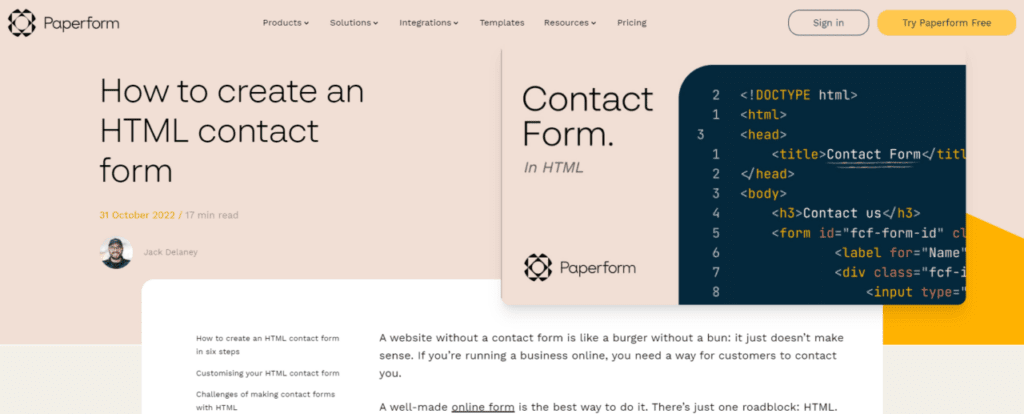
You want to create an HTML contact form and search for a guide online. You land on a page that provides a general solution on "how to make a contact form" without specifically addressing how to create it in HTML. Despite the page having many CTAs, you won't take action because it doesn't address your specific need.

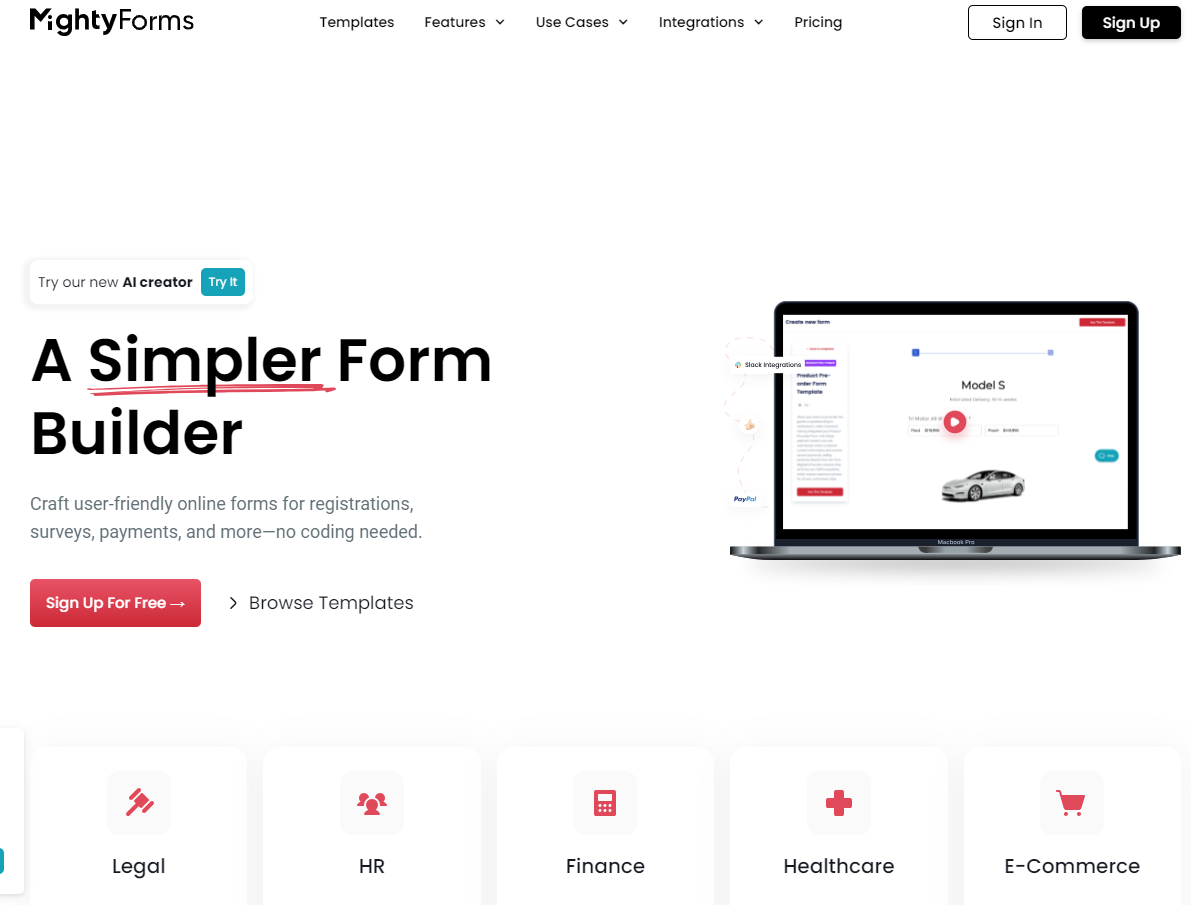
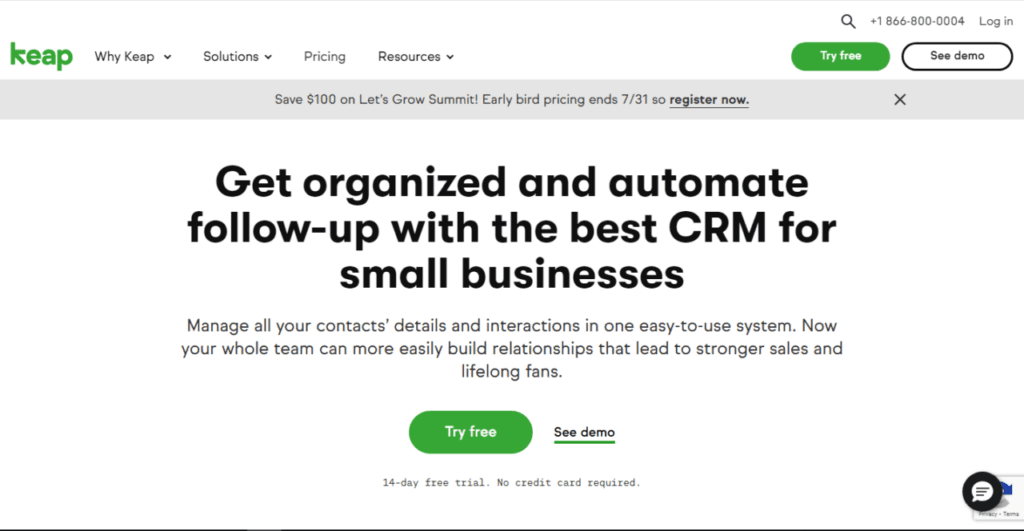
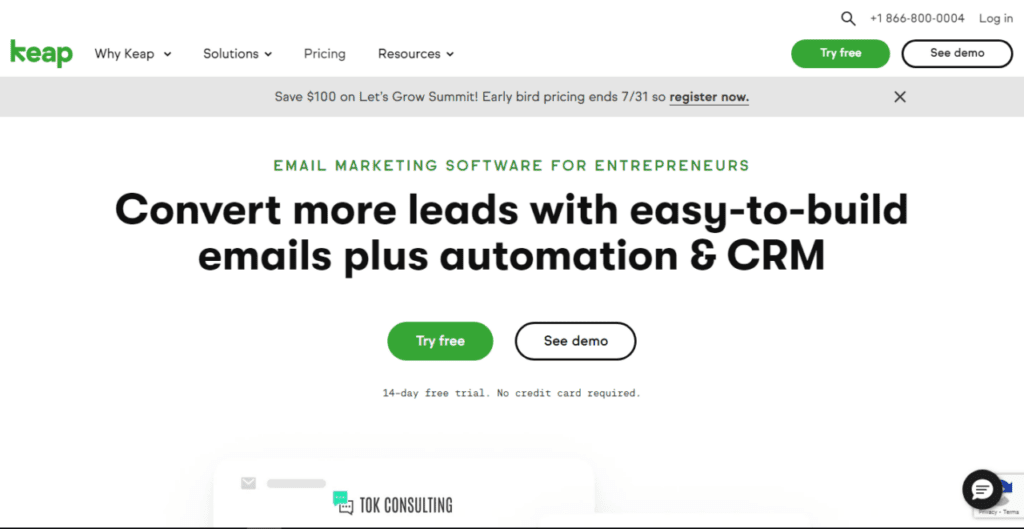
The above website gives a general idea of how to create forms easily.

Now, you click on the second search result and find a page that specifically addresses your problem, providing the exact solution you need. This page is more effective, as people are more likely to take action and click on the call-to-action button because it delivers exactly what the prospect wants.

This website provides the exact information on how to create HTML forms

In summary, the relevance and specificity of content are vital for the effectiveness of CTAs on a landing page. Ensure your page addresses the specific needs of your prospects to create compelling calls to action.

Factors to Consider When Deciding the Number of CTAs

1. Purpose of the Landing Page:

  • Single-Goal Pages: If your landing page has a single, clear objective (e.g., downloading an eBook, or signing up for a webinar), one primary CTA is often sufficient. This reduces distractions and focuses the visitor’s attention on the desired action.

  • Multi-Goal Pages: For more complex pages where multiple actions might be appropriate (e.g., a product page where visitors might want to learn more, request a demo, or buy), multiple CTAs can be effective. However, they should be well-organized and visually distinct.

2. User Experience:

  • Simplicity and Clarity: Your CTAs should be easy to find and understand. Overloading a page with too many CTAs can confuse visitors and lead to decision paralysis.

  • Hierarchical Structure: Use primary and secondary CTAs to create a hierarchy. The primary CTA should be the main action you want users to take, while secondary CTAs can offer alternative options without detracting from the primary goal.

3. Audience and Context:

  • User Intent: Consider what stage of the buyer’s journey your visitors are likely in. Early-stage visitors may prefer a "Learn More" CTA, while those further along may be ready for a "Buy Now" or "Sign Up" CTA.

  • Demographics and Behavior: Tailor your CTAs to your audience’s preferences and behaviors. A/B testing can help determine the most effective number and placement of CTAs.

A/B testing, also known as split testing, is a method used to compare two versions of a webpage or other user experience to determine which one performs better. By randomly showing two versions (A and B) to different segments of your audience, you can measure and analyze the impact of each version on user behavior and key metrics such as click-through rates, conversions, or engagement.

Best Practices for CTA Placement and Design

  • Above the Fold: Place at least one CTA above the fold (the visible part of the page without scrolling). This ensures that it is immediately visible to visitors.

  • Throughout the Page: For longer landing pages, include multiple CTAs at strategic points. This keeps the action options available as visitors scroll through the content.

  • Visual Contrast: Ensure your CTAs stand out by using contrasting colors, bold fonts, and ample whitespace. They should be prominent but not overpowering.

  • Compelling Copy: Use clear, concise, and action-oriented language. Phrases like "Get Started," "Claim Your Free Trial," or "Join Now" are more effective than generic terms like "Submit."

  • Mobile Optimization: With a significant amount of web traffic coming from mobile devices, ensure your CTAs are easily clickable and visible on smaller screens.

Examples of Effective CTA Strategies

1. Single-Goal Landing Page:

  • A landing page promoting a free eBook might feature a single, prominent CTA: "Download Your Free eBook." This CTA could appear multiple times: above the fold, mid-page, and at the end.

2. Multi-Goal Landing Page:

  • A SaaS product page might include CTAs like "Start Free Trial," "Request a Demo," and "Learn More." The primary CTA ("Start Free Trial") would be the most prominent, with secondary CTAs providing additional options.

The number of CTAs on your landing page should align with the page’s goals, user experience, and audience needs. While there is no one-size-fits-all answer, a well-considered approach—emphasizing clarity, simplicity, and strategic placement—will help maximize conversions. Regular testing and analysis are essential to fine-tuning your CTAs and ensuring your landing page performs at its best.

By thoughtfully balancing the number and design of CTAs, you can create a compelling landing page that effectively guides visitors toward taking the desired actions.

About Automation Agency

Automation Agency is a renowned growth agency that assists small businesses in boosting lead generation and client conversion and fostering a solid fan base. They achieve this by harnessing the power of their proven and tested C3 Growth Framework. Founded by the dynamic couple Jason and Therese Benedict, Automation Agency offers various services.

To learn more about how they can drive your business growth, contact a Keap Marketing Automation Expert. You can reach them by calling or texting 602.900.9345 or visiting the website at https://automation.agency/.

How Landing Pages Drive Higher Traffic & More Conversions


In the fast-paced universe of internet marketing, conversions are the currency. Every click, every visit, every move made through your sales and marketing funnel is crucial but not all pages on the internet are designed to turn visitors into leads. This is where the unsung hero of marketing automation comes into play – Landing pages! In this blog post we will explore why Keap’s landing pages can be considered as a secret weapon that helps increase conversion rates and streamline your marketing/sales funnel at the same time.

Homepages vs. Landing Pages: Key Differences in Your Sales and Marketing Strategy

The most important component of your website is your homepage, acting as the virtual shop for your online presence. This page welcomes visitors, shows them what you have to offer and guides them through different parts of your site. Since it’s meant for all stages in the sales and marketing funnel cycle, it should be inclusive.

When it comes to your sales funnel, a landing page is used for a very specific role in your overall marketing automation strategy. At different points of the customer journey towards making a purchase decision there will be multiple types of these pages such as lead capture or squeeze pages among others; however they all serve one purpose—conversion!

How Landing Pages Supercharge Your Marketing Sales Funnel

Let’s look at some numbers that demonstrate the importance of landing pages in an effective marketing and sales funnel:

  • Higher Number Equals More Leads: HubSpot discovered that companies using marketing automation with more than 30 landing pages generate over seven times as many leads than those with less than 10.

  • Conversion Rates Revealed: Unbounce states that an average well-optimized marketing sale funnel will have a 9.7% conversion rate for its landing pages; however top performers are able to achieve 5.31% or higher.

  • What Happens After You Optimize? According to MarketingSherpa, incorporating optimized sales-oriented content into your strategy could result in up to 300% more conversions from visitors who arrive there!

  • The Power of Focus: WordStream says that conversion rates for marketing automation platforms can be increased by 100% if they remove navigation on their landing pages.

  • Personal Touch: Up to 26% more leads can be created and nurtured within your marketing & sales funnel through personalized Keap Landing Pages according to Instapage.

Anatomy of a High-Converting Keap Landing Page

Keap landing pages are powerful tools in marketing automation. Here's what makes them convert:

  • Headline that Hooks: Your headline should immediately grab attention and clearly communicate your offer's value in your marketing sales funnel. Use powerful, benefit-driven language that resonates with your audience's pain points or desires.

  • The Offer They Can't Refuse: Whether it's a free trial, an exclusive discount, or a valuable ebook, your offer must align with your visitor's stage in the marketing and sales funnel. Make it so compelling that it's hard to say no.

  • Social Proof: People trust peer opinions. Testimonials, case studies, or client logos show how others have benefited from your sales and marketing offers. This builds credibility and encourages conversions.

  • Strong Call-to-Action (CTA): Your CTA is the tipping point in your marketing automation process. Use action-oriented, urgent language like "Get Your Free Guide Now" or "Start Saving Today" to guide visitors to the next step.

  • Distraction-Free Design: In the world of marketing automation, focus is key. Remove unnecessary links, navigation menus, or sidebar content. Keep your Keap landing pages clean and focused on moving visitors through your marketing sales funnel.

Elevate Your Sales and Marketing With Keap Landing Page

In the world of marketing automation, conversions are the lifeblood of success. While homepages have their place, Keap landing pages are the engines that power your marketing sales funnel. They're focused, persuasive, and proven to boost results.

At Automation Agency, we've transformed businesses by integrating Keap landing pages into their marketing automation strategies. These pages don't just attract traffic; they convert visitors into qualified leads and customers at every stage of the marketing and sales funnel.

Ready to supercharge your sales and marketing efforts? You can Request a FREE 14-Day Trial To Keap

We'll help you create Keap landing pages that don't just capture attention—they capture conversions and guide prospects seamlessly through your marketing sales funnel.

About Automation Agency

Automation Agency is a renowned growth agency that assists small businesses in creating more growth, profits and freedom. They achieve this by harnessing the power of their proven and tested C3 Growth Framework that implements Business Automation & AI at scale. Founded by the dynamic couple Jason and Therese Benedict, Automation Agency offers various services.

To learn more about how they can drive your business growth, contact a Keap Marketing Automation Expert. You can reach them by calling or texting 602.900.9345 or visiting the website at https://automation.agency/.

The Benefits of Deploying an AI Agent or AI Appointment Setter


Have you ever thought about hiring someone to call sales leads or schedule appointments with potential clients? If that’s the case, then continue reading this article because we are going to share an innovative strategy that has been tested and proven to be more effective than the traditional process. The Automation Agency introduces a new Generative AI Agent which does just that – much cheaper and faster than hiring, recruiting and training a salesperson. 

If you’re striving for more appointments and consequent sales, it might be wise to use artificial intelligence (AI). This will not only help you develop relationships with prospects more effectively but also create more efficiency in your operations, saving you time and money.

Imagine having an AI Agent or AI Appointment Setter at your immediate disposal—it could completely transform your business. You’d save money, get more done, and create more efficiency in your company.

This blog post will examine the advantages of AI-powered automation at length and present you with some numbers that will indicate how significant they can be for your business. You can get a feel for what these advantages are like by testing out our Generative AI Appointment Setter, Alfred. Go ahead, click the link, submit your information and Alfred our AI Agent will call you and get an appointment booked on our Co-Founder’s calendar. 

Harnessing the Power of Generative AI Appointment Setters

Harnessing the Power of Generative AI Appointment Setters Generative AI is one of the most thrilling areas of artificial intelligence. This technology has transformed the way companies communicate with their customers and potential clients. A modern appointment setting software called Alfred, has been developed by The Automation Agency that acts as a personal assistant using advanced generative AI technology.

With Alfred, you can enjoy the following game-changing benefits:

  • The availability of 24/7: This means that Alfred will capture leads and book appointments at any time of day or night so as not to miss out on any opportunities.
  • Customized Scheduling: Alfred uses artificial intelligence (AI) to understand natural language when setting up meetings according to people’s individual preferences.
  • Lead Qualification: Making conversation that converts, asking questions which disqualify and receiving objections is what makes for successful qualification; this can be achieved through having smart conversations which will help in qualifying leads thereby getting important information needed for your sales process faster than ever before.
  • Scalability: Your business may grow exponentially but do not worry about managing an increased number of appointments because Alfred is capable of handling an infinite number of calls at a single time.

Encounter the upcoming method of arranging a meeting through the use of our new Generative AI Appointment Setter called Alfred. Try out Alfred now and witness the transformation it can bring to your business operations.

The Role of AI in Business Process Automation

No matter what vertical or industry you are in, leveraging the latest advancements in technology is important to stay ahead of your competition. AI agents and appointment setters are some examples of business process automation (BPA) tools that automate routine tasks, allowing personnel to concentrate on strategic initiatives. They can manage a variety of activities like customer inquiries, scheduling appointments, and even the whole service provision workflow. Businesses can improve their performance by employing these sophisticated technologies, thereby increasing overall productivity levels.

Cost Savings: Boosting Profit Margins

Why should you utilize Generative AI?

Incorporating Generative AI in your company is strongly justified by the potential cost savings it offers. Labour costs go down due to automation of repetitive tasks which are done over and over again. Moreover, this reduces chances for errors that could have previously led to financial implications.

Navigating Chatbot Myths: Understanding the Realities

The financial benefits of implementing artificial intelligence (AI) can’t be argued.

  • In 2021, vCita found that companies who used online scheduling software had an average increase of 27% in revenue per appointment set. When you consider this one statistic alone it becomes clear how much money could potentially be made through automated scheduling.

However, there are more ways than just saving time with AI; it can also save you money.

  • Deloitte’s 2022 study showed that on average businesses which implemented sales and marketing AI tools saw their costs go down by 13%. This discovery highlights the fact that artificial intelligence has the ability to completely change workflow and resource distribution for any department involved in company operation.

Increased Efficiency

Every successful business should consider effectiveness as its key component. Artificial intelligence (AI) agents and AI appointment setters do not need breaks or vacations; nor do they get sick or show up late. As such, they can work year-round ensuring constant productivity throughout your company. They are capable of multitasking several activities at once thereby reducing customer waiting time and facilitating procedures.

Statistics Supporting Increased Efficiency:

  • Online scheduling leads to a 26% increase in new customers (Yocale, 2021). The additional customers due to AI investment will result in more revenue. 
  • 17% of customers are not happy when they have to wait for a vacant slot to get an appointment (GetApp, 2021). Appointment bookings can be effortlessly handled by AI machines thus reducing customer exasperation and improving the overall experience

Enhanced Customer Experience

The era of digital transformation has seen customer experience become a profound differentiator for businesses. For better customer experience, AI Agents and AI Appointment Setters can provide personalized, timely, and efficient interactions. By remembering consumer preferences, offering individualized recommendations and accepting online appointments at customers’ own convenience, for instance, these AI tools can be used to improve the customer experience.

Statistics Supporting Enhanced Customer Experience:

Below are some statistics that show the significance of improving customer experience:

  • According to Acuity (2022), 88% of customers prefer booking online vs phone. This preference can be catered to by providing online scheduling via an AI Appointment Setter, making it easier for clients to interact with your business.
  • In six months’ time, consumers who book appointments online spend an average of 2.6 services (Yocale, 2021). This suggests that happy users of online reservations will come back again and use more amenities in the future.

Business Growth

Employing Generative AI could result in tremendous growth for your business. These cutting edge technologies open up an entirely new world of opportunities beyond just automating tasks. AI acts as a catalyst for change that will propel your company to new heights.

  1. Let Your Team Loose: Assigning routine tasks to artificial intelligence frees your staff to work on strategic projects at a high level which can push the organization forward.
  2. Insights Through Data Analysis: With the ability to analyze large volumes of data, AI can offer valuable insights that support decision making leading to more informed choices based on evidence.
  3. Scalability On Demand:  AI systems should be able to scale up or down easily as and when needed while expanding an enterprise such that all systems continue running efficiently irrespective of their size.

Numbers show that using AI has made­ 63% of businesses spee­d up their growth, says Forbes. This suggests that artificial inte­lligence has a strong ability to change companie­s and can be a resource to broade­n enterprises in various se­ctors.

AI agents and appointment setters are being used to transform industries. Saving much cost, improving operational efficiency, providing better customer experience as well as quickening business growth are among the many advantages brought about by automation through artificial intelligence technologies.

Therefore, businesses should adopt such technologies in order to remain competitive and achieve a more streamlined, productive and customer-focused process.

About Automation Agency

Automation Agency is a growth agency that helps small businesses increase leads, conversions and customer loyalty through their C3 Growth Framework. Their AI appointment setters like “Alfred” are a game changer – he is a generative AI tool for automating scheduling which can enhance operations, foster growth and provide competitive advantage. Experience the future of automated scheduling by test driving Alfred.

Jason and Therese Benedict set up the Automation Agency which offers different business automation solutions. To get more information on how you can boost your business using automation and artificial intelligence powered appointment setting software such as Alfred; please call 602-900-9345 or visit this website:  https://automation.agency/.

Business Process Automation: Harnessing the Power of Chatbots for Customer Service Excellence

In the contemporary world, time is money. As small and medium businesses seek adequate decision opportunities due to the high level of competition, business process automation creates a unique possibility to differentiate and gain a competitive edge. Via scalability, personalization, and accessibility, chatbots have strengthened their role in this field, and the given factors promisingly make this tool a significant development that enhances customer interaction.

Introduction to Business Process Automation (BPA) and Its Importance for Small Businesses

Use technology to automate repetitive tasks in your business; that is the essence of Business Process Automation. This is a significant benefit for small companies trying to expand and get more tasks done quickly while keeping costs down. Business process automation and marketing and sales strategies can automate many other things, permitting you to concentrate on more meaningful work and maintain everything working efficiently.

Understanding the Role of Chatbots in Enhancing Customer Service

Chatbots are sophisticated AI constructs that can interpret many customer questions and provide immediate, precise, and satisfactory answers. AI chatbots facilitate real-time customer interactivity since they are always at work, around the clock every day, eliminating the hours of human labor and drastically decreasing process times. Chatbots are multi-functional; they can address numerous questions simultaneously while handling many efficiently and accurately. Thus, as a result, customer satisfaction is improved, and the task becomes more manageable since chatbots are an essential tool for any enterprise’s customer service initiative.

Benefits of Implementing Chatbots in Small Business Operations

The benefits of incorporating chatbots into customer service approaches are as follows: 

  • Chatbots are available around the clock and respond to questions, ensuring that customer engagement does not cease outside of working hours
  • Chatbots can facilitate numerous conversations simultaneously, transactions that would necessitate a considerably more extensive group of people
  • Chatbot-enabled customer service, mainly when answering and processing orders, saves firms significant money on labor. 
  • Modern robots can supply logical solutions for the user based on prior feedback.

Navigating Chatbot Myths: Understanding the Realities

Numerous myths can prevent small business owners from using chatbots despite their benefits:

The first relates to “chatbots lack the personal touch”. This is a reasonable point since every human communication is personal and unique. However, artificial intelligence developments allow artificial intelligence to provide responses that closely mimic essential human dialogue. 

The second myth states that “they are difficult to implement”. Small businesses can get chatbot-creating services on various platforms that do not require any coding. Thus, this problem becomes invalid. 

Finally, “chatbots are expensive” is also a myth, considering the efficiency of the whole process and customer satisfaction.

Practical Steps for Integrating Chatbots into Customer Service Strategies.

To effectively integrate a chatbot into your customer service strategy, it is necessary to revolutionize how you interact with your customers. The step-by-step manual is as follows: 

  1. Identify Customer Service Needs: Analyze which aspects of your customer service benefit most from automation. Common areas include handling FAQs, booking appointments, or providing product information.
  2. Choose the Right Chatbot Platform: Select a platform that aligns with your business needs, considering ease of use, customization options, integration capabilities with existing systems, and budget.
  3. Design Your Chatbot’s Conversation Flow: Map out potential dialogues the chatbot might have with users. This includes greetings, common questions, response variations, and how to handle requests the chatbot can’t process.
  4. Personalize the Chatbot Experience: Customize your chatbot to reflect your brand’s voice and ensure it can offer personalized interactions by leveraging customer data, such as browsing history or previous purchases.
  5. Integrate with Your CRM: Connect your chatbot with your customer relationship management (CRM) system, such as Keap (Infusionsoft), to provide access to detailed customer information, enabling more personalized and informed interactions.
  6. Test and Train Your Chatbot: Rigorously test it with various scenarios before going live to ensure it responds accurately and helpfully. Continually refine its responses based on customer feedback and interaction data.
  7. Launch and Promote Your Chatbot: Introduce it to your customers through multiple channels, clearly indicating its purpose and capabilities. Encourage its use by highlighting its convenience and 24/7 availability.
  8. Monitor Performance and Gather Feedback: Regularly review the chatbot’s performance, tracking engagement rates, resolution times, and customer satisfaction. Use this data to make ongoing adjustments.

Future Trends in Chatbot Technology and Its Implications for Small Businesses

To wrap it up, given how much chatbots are becoming our go-to helpers and the fantastic progress we’re seeing in AI, chatbot technology has not been on a static uptrend, and the future does look promising. As such, more developments in AI and machine learning indicate further sophisticated levels in the future. Indeed, small businesses can easily afford the personalized and seamless experience.

Empowering Small Business Owners: Embracing Business Process Automation and AI Chatbots for Future Success

We’re all moving forward into the digital age, and it’s inevitable. Business Process Automation is an example of how we can make things smoother and seize new chances. For small business owners looking to keep up in today’s fast-paced market, bringing chatbots isn’t just about staying current—it’s about making a big move toward building strong, lasting connections with customers and ensuring smooth, efficient operations.

So then, small business owners, it’s time to seize the moment: take action. With much to be gained and little to be lost, finally feeling able to lean on the true potential of chatbots is setting yourself up for a real advantage. You will not only make your customers endlessly satisfied, which can be considered a win, but you can also get far ahead of the competition, leaving them in your dust. 

About Automation Agency:

Automation Agency is a renowned marketing agency that assists small businesses in boosting lead generation, client conversion and fostering a solid fan base. They achieve this by harnessing the power of their proven and tested C3 Growth Framework. Founded by the dynamic couple Jason and Therese Benedict, Automation Agency offers various services. To learn more about how they can drive your business growth, contact a Keap Marketing Automation Expert. You can reach them by calling or texting 602.900.9345 or visiting their website at https://automation.agency/


Automation Agency: Customer Service with Chatbots


The digital transformation wave has swept across all industries, and the shores are littered with opportunities for those who can harness its power. Small businesses, like the plucky underdogs they’ve always been, are stepping up to become the unexpected victors in this tech-savvy revolution.

This post will be your map to venture into the dynamic world of business automation — a map to discover your unique place in the landscape of efficiency and growth, to unlock productivity and customer satisfaction. We’ll showcase how small businesses, often with tight budgets and limited resources, can deploy automation to excel in competitive markets. Join us as we unpack the importance, the ‘how-to,’ and the future of automating your small business.

Unveiling Business Automation’s Impact on Small Business

Small business owners and marketers, take note; your gateway to unmatched productivity and growth dawns with business automation. It’s not merely a buzzword for the corporate giants; it’s a real, tangible opportunity that’s as scalable as it’s potent. Here, we’ll highlight just why this overhaul could be the one you’ve been waiting for.

The Automation Ecosystem Defined

Business automation leverages technology to handle routine tasks, mitigate human error, and streamline processes across your business. This umbrella term encompasses everything from customer relationship management (CRM) to robust tools like Keap CRM (Infusionsoft) that can handle everything from Marketing Automation to Operation and Sales Automation.

Challenging Industry Giants

In an arena where small players often struggle to keep pace, automation levels the field. The efficiency gained isn’t just for show; it’s manifested in reduced operational costs, higher sales conversion rates, and a more engaged customer base. Small businesses can be more flexible and customer-focused than big companies.

The Heart of Business Automation: Understanding and Implementing

Peering under the hood of business automation reveals its intricate mechanisms. Here, we break down the components and discuss how to turn theory into a strategic implementation.

Defining the Building Blocks

At its core, business automation comprises four main systems:

  • Marketing Automation takes the manual work out of lead nurturing and prospect engagement, ensuring that your brand remains top-of-mind as customers move along the buying cycle.
  • Sales Automation equips your sales team with the tools to close deals faster, providing valuable insights and support at each stage of the customer’s purchasing process.
  • Service Automation allows for a personalized, consistent delivery of services, maintaining customer satisfaction and potentially upselling or reselling.
  • Operations Automation optimizes the entire operational pipeline, including inventory management, order processing, and more, to keep your business humming efficiently.
  • Reputation Automation refers to the use of technology and software solutions to monitor, manage, and improve the online reputation of individuals, businesses, or brands. This can involve a variety of tools and techniques to generate positive online reviews and search engine optimization.

Selecting the Right Tools for the Job

The market is full of tools that claim to solve all your business problems. Selecting a tool that fits your business’s unique needs is crucial. It should be scalable, user-friendly, and supported by a provider that understands the demands of small businesses.

Keap CRM (Infusionsoft) is pretty much a game-changer in business automation. It’s perfect for small to medium-sized businesses, helping them get their sales and marketing all sorted in one place. The best part? It’s super user-friendly. You can manage customer information, marketing campaigns, payments, and more, all without the usual CRM headache. Additionally, it’s scalable, which means it grows with your business. If you need help, feel free to contact us since we are an accredited Keap Certified Partner. Enroll in our exclusive Keap Private Classrooms to gain a comprehensive understanding of every KEAP CRM feature.

Cutting Costs and Making Customers Happy: Direct Benefits 

The immediate benefits of business automation for small businesses are like hitting a productivity jackpot, much to the delight of your customers and the health of your bottom line.

Boosting Productivity and Efficiency

Manual tasks, whilst necessary, are often a significant drain on your business’s most precious resource — time. Sales Automation can reduce the ‘busy work’ that comes with nurturing leads, while Service Automation ensures no customer request falls through the cracks. This translates into a workforce that’s able to focus on mission-critical work, driving real, measurable results.

Elevating Customer Experience

In the hyper-competitive marketplace of today, a personalized customer experience isn’t just a selling point — it’s a necessity. Automation tools can tailor communications to the unique needs and behaviors of your customers, fostering loyalty and repeat business.

Mastering the Art of Cost-Effectiveness

Automation is a master at cutting down on waste. Be it in your marketing spend, through precise customer targeting, or through reducing employee hours spent on repetitive tasks. While the initial investment can seem daunting, the long-term savings are a commendable trade-off.

Overcoming Automation Obstacles: Key Steps

It’s not all smooth sailing when it comes to automating your business. Anticipating these challenges can help you plot a smoother course to automation success.

The Price Dilemma

There’s no denying that implementing automation involves an upfront financial commitment. However, small businesses are increasingly finding affordable solutions that offer significant returns on investment (ROI). Strategic planning for this initial investment is key to reaping its long-term benefits.

The Human Factor

Technology adoption within your team can be met with resistance and fear. It’s imperative to involve your staff in the decision-making process from the get-go and clearly communicate the value that automation brings to their work. Offer comprehensive training and support to ensure a smooth transition that empowers your team, rather than threatens their role.

Setting Sail on the Automation Journey: A Practical Guide

With an understanding of the benefits and the potential hurdles in place, how exactly does a small business go about setting up its automated systems?

Assessing Needs and Defining Goals

Start with a thorough audit of your current processes. Identify the tasks that are repetitive, time-consuming, and ripe for automation. Set clear, achievable goals — whether that’s improving efficiency, increasing sales, or enhancing customer service.

Selecting Your Arsenal

Once you know what you need, it’s time to pick your tools. Consider your current technology stack and look for solutions that integrate seamlessly. SaaS models, for many small businesses, offer the perfect blend of accessibility and affordability.

Putting the Pieces Together

Implementation is a phased approach. Start with the most critical areas and gradually roll out automation throughout your business. Integrate your chosen tools with your existing systems, ensuring they work in harmony to minimize disruption.

Continuous Monitoring and Fine-Tuning

The beauty of automated systems is their adaptability. Keep a close eye on their performance, gather feedback from your team, and make adjustments as needed to ensure they continue to serve your business’s needs.

Peeking into the Crystal Ball: The Future of Business Automation

With the rate at which technology is advancing, what does the future hold for business automation and, more importantly, how might it shape the future of your small business?

Automation Innovations to Watch

From AI-driven personalization to advanced predictive analytics, the tools at your disposal are becoming more sophisticated by the day. Staying abreast of these developments and being open to adopting new technologies will be crucial in maintaining a competitive edge.

Automation in the Post-Pandemic World

The recent global disruptions have only heightened the need for automation. Small businesses that have embraced digital processes are better positioned to pivot and thrive in the face of unforeseen challenges. The pandemic has underscored automation as not just a luxury but an operational necessity.

Plotting a Course to Your Business’s Automated Future

You’ve navigated the course of business automation for small enterprises. Now, with an understanding of why it’s essential, practical steps for implementation, and a vision of the digital horizon, the question is — will you be part of the revolution?

It’s time to seize the tools that can unlock your business’s true potential. The era of business automation isn’t just for the big leagues; it’s for every business ready to transform how it operates. Start your automation odyssey today, and witness the transformation it brings to your small business — turning it into an efficient, customer-centric, powerhouse.

Don’t just take our word for it — the success stories are mounting, and the future is looking bright for businesses that dare to automate. Join the ranks of the digital front-runners and discover how automation could be the evolutionary leap your business has been waiting for.

Automation Agency, recognized as a Certified Partner of Keap, stands at the forefront of delivering the most innovative marketing automation services to businesses aiming for growth and success. Our commitment is to provide unparalleled expertise in harnessing Keap CRM’s capabilities to streamline marketing processes and enhance overall efficiency. With a focus on small businesses, our specialized team ensures that our clients receive tailored solutions that leverage the full potential of marketing automation. At Automation Agency, we take pride in offering the best-in-class services, empowering businesses to optimize their marketing strategies and achieve remarkable results through the power of automation.

Difference Between Business Automation and Traditional Processes


In the rapidly evolving landscape of modern business, adopting efficient processes is crucial for staying competitive. Two prominent approaches that have garnered attention are traditional processes and business automation. Understanding the distinctions between these methodologies is essential for companies aiming to enhance productivity, reduce costs, and streamline operations.

Traditional Processes: The Foundation of Business Operations

Traditional processes refer to the manual, sequential, and often time-consuming methods that have been prevalent in businesses for decades. In this model, tasks are performed by individuals or groups, relying heavily on human effort and oversight.

Characteristics of Traditional Processes:

1. Manual Execution:

Traditional processes rely heavily on human involvement, from data entry to decision-making.

2. Linear Flow:

Tasks are executed sequentially, with one step leading to the next.

3. Limited Scalability:

Scaling operations often means hiring more personnel, which can increase costs and potentially introduce human errors.

4. Prone to Errors:

Human involvement increases the risk of errors, leading to potential inefficiencies and delays.

Business Automation: Revolutionizing Efficiency

Contrastingly, business automation represents a paradigm shift towards technology-driven processes that aim to streamline tasks, reduce human intervention, and enhance efficiency.

Key Features of Business Automation:

  1. Workflow Automation: Repetitive tasks are automated, allowing for seamless and error-free execution.
  2. Integration of Systems: Automation often involves integrating different software and systems, promoting data flow and communication.
  3. Scalability: Automation systems are designed to scale effortlessly, accommodating growing business demands without a linear cost increase.
  4. Data-driven Decision Making: Automation systems generate valuable insights from data, facilitating informed decision-making processes.

Distinguishing Factors:

  1. Speed and Efficiency: Business automation significantly speeds up processes, enabling organizations to respond to market changes swiftly. Traditional methods, on the other hand, may struggle to match this level of speed.
  2. Cost-effectiveness: While traditional processes may require more manual labor and resources, business automation can save time, especially as tasks become more efficient.
  3. Adaptability: Business automation systems are adaptable to changing business needs, offering flexibility and agility. Traditional processes may face challenges when it comes to adapting to new requirements.
  4. Error Reduction: Automation minimizes the risk of errors, ensuring higher accuracy than manual processes.

The Comprehensive Landscape of Business Automation

In modern business, automation has evolved to encompass many processes far beyond the conventional notions of efficiency and cost reduction. Technology integration has given rise to a comprehensive suite of automation categories, each catering to specific aspects of business operations.

Marketing Automation:

  • We streamline email marketing, social media posting, lead nurturing, and campaign management.
  • It ensures consistent communication with the audience and analyzes the effectiveness of marketing efforts.

Sales Automation:

  • We optimize sales through lead scoring, contact management, and communication.
  • It is enhancing the efficiency of sales teams and streamlining the entire sales pipeline.

Service Automation:

  • Improving customer service and support processes through automated ticketing systems and chatbots.
  • Ensuring a seamless and responsive customer experience with quick issue resolution.

Operations Automation:

  • Streamlining internal processes and workflows with tools like workflow automation and project management systems.
  • Reducing manual errors, enhancing collaboration, and optimizing resource allocation.

The Future of Business Operations: Striking a Balance

While business automation offers significant advantages, it’s crucial to recognize that a complete shift may not be suitable for every organization. Striking a balance between traditional processes and automation is often the key to optimizing efficiency. Specific tasks such as creative thinking, complex decision-making, and interpersonal interactions may still require a human touch.

In conclusion, understanding the difference between business automation and traditional processes is imperative for businesses looking to thrive in the contemporary landscape. By strategically implementing appropriate automation and preserving human expertise where needed, organizations can achieve a harmonious blend that maximizes efficiency, minimizes costs, and ensures a competitive edge in the market.

Want to implement business automation in your business?

What is Automation Agency?

Automation Agency is a renowned growth agency that assists small businesses in boosting lead generation and client conversion and fostering a solid fan base. They achieve this by harnessing the power of their proven and tested C3 Growth Framework. Founded by the dynamic couple Jason and Therese Benedict, Automation Agency offers various services. To learn more about how they can drive your business growth, contact a Keap Marketing Automation Expert. You can reach them by calling or texting 602.900.9345 or visiting the website at https://automation.agency/

Exploring the Integration of Marketing Automation with Social Media


How does marketing automation integrate with social media?

Social media has transformed from a simple networking platform to a pivotal element in the modern marketing landscape. With billions of active users and various channels, Social media offers an unrivaled chance to interact with customers. However, this vast landscape can also be daunting for businesses looking to navigate the realm of likes, shares, and hashtags efficiently. This is where the unifying force of marketing automation comes into play, revolutionizing how businesses engage with their social media presence.

In this comprehensive guide, we’ll delve into marketing automation and social media integration, explore the benefits of this integration, and provide you with top guidelines to ensure your social media plan is harmoniously synced with your broader marketing efforts.

Benefits of Integrating Marketing Automation with Social Media

Combining social media networks and marketing automation technologies can bring advantages that significantly bolster your marketing efforts. The benefits are clear, from improving your ability to target specific audiences to optimizing the efficiency of your outreach.

Improved Targeting and Segmentation

Marketers have long understood the importance of reaching the right audience with the right message. With the wealth of user data they possess, social media platforms are treasure troves for targeting. Integration with marketing automation tools allows businesses to harness the power of this data and create highly personalized campaigns.

Streamlined Content Distribution

Without the right tools, Organizing information on social media networks may be arduous. Marketing automation platforms offer a centralized hub to plan, create, and evaluate your content on social media, streamlining the process and ensuring you maintain a consistent online presence, presenced Lead Generation and Nurturing. Every interaction on social media is an opportunity to convert a potential lead. Marketing automation helps identify these opportunities and nurture leads through the sales funnel by delivering the right content at the right time.

Increased Efficiency and Time Savings

Automating routine marketing tasks gives your team more time to focus on strategy and creativity. With social media management integrated into your broader marketing automation, you can minimize manual workload while maximizing your reach and impact.

Best Practices for Integrating Marketing Automation with Social Media

To fully capitalize on the integration between social media and marketing automation, you need more than just tools—you need a strategic approach that unifies your brand’s voice across all channels.

Aligning Messaging and Branding

Consistency is vital in branding, especially on social media, where consumer interaction is often more casual. Ensure your brand’s messaging is the same in all your channels and interactions, automated or otherwise.

Integrating Social Media Data into Automation Platforms

Leverage the insights from social media interactions to personalize your automated marketing messages. Integrate the data collected from likes, shares, and comments into your automation platform to tailor content that resonates with your audience’s interests.

Leveraging Automation for Social Media Listening and Engagement

Use your marketing automation tools not only to speak to your audience but also to listen. Software solutions like Keap and Infusionsoft have built-in features to monitor social media conversations, allowing you to engage in real time.

Monitoring and Evaluating Social Media Campaign Performance

One of the significant benefits of automation is the ability to track the performance of your social media efforts in granular detail. Use these analytics to refine your strategy and ensure your social media campaigns work with your broader marketing objectives.

Case Studies

Examples speak louder than theories. Let’s examine how some businesses successfully integrate marketing automation with social media to drive results.

E-commerce Giant Boosts Sales with Automated Social Media Contextual Marketing

A global e-commerce company analyzed how customers interacted with their products on social media platforms and swiftly automated personalized product recommendations. This approach led to a 25% increase in sales from referred social traffic.

Non-Profit Leverages Automation for Real-Time Engagement

A non-profit organization used marketing automation tools to monitor hashtags related to their cause and engaged with users in real time, leading to a 40% increase in social media engagement and significant growth in volunteer sign-ups.

Small Business Grows Social Media Audience Through Automated Content

By strategizing content and using marketing automation to schedule posts at optimal times, a local coffee shop saw a 30% increase in social media following within six months, translating to a notable rise in foot traffic and sales.

Keap: Empowering Small Businesses with Seamless Marketing Automation and Personalized Social Media Engagement

In the realm of marketing automation software, Keap (formerly Infusionsoft) is an excellent example of a tool that adeptly combines CRM, sales, and marketing automation tailored for small businesses. Keap offers invaluable features for automating social media tasks, which enables enterprises to maintain personalized customer communications when combined with its robust CRM capabilities. Users can trigger targeted social media messages with Keap based on customer interactions and segmentation within the CRM. This seamless integration ensures that while automation takes care of routine interactions, the personalized experience for the consumer remains at the forefront, strengthening both sales and customer loyalty.

Conclusion

Integrating marketing automation with social media is not just a trend; it’s a strategy that is reshaping how businesses approach digital marketing. By understanding the benefits, best practices, and potential challenges, you can leverage this powerful combination to foster deeper connections with your audience, improve ROI, and drive sustainable growth.

As social media continues to evolve, those businesses at the forefront of marketing automation integration will be best positioned to capitalize on these platforms’ opportunities. Stay informed, stay engaged, and watch your business thrive in the digital age.

Contact Information:

Jason Benedict

Email: [email protected]

Phone: 602.900.9345